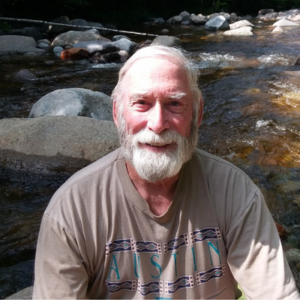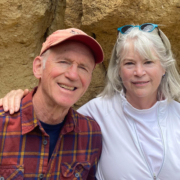
CASA Advocate Pete King: The Only Guy in the World Who Sends 20 Mother’s Day Cards

At the time of writing it’s early May, and Mother’s Day is coming up. In the main office of Court Appointed Special Advocates (CASA) of New Hampshire sits a helpful reminder – a stack of beautiful cards provided by volunteer advocate Pete King. They were designed by Pete’s friend Jill Weber, who donated her artwork to raise funds for CASA. In addition to the cards he purchases for staff to give to the moms in their lives, Pete will also be mailing out cards of his own.

“I’ve made my list,” Pete says. “I have 22 Mother’s Day cards I will send this year. This is my way of staying in touch with the moms and foster moms of the children I’ve been on cases for. With many of them that’s the only contact I will have with them, I’ll send them a card each year. Usually they text me back and tell me how they’re doing and send me a picture of the child.” He reflects, “I think I’m the only guy in the world who sends 20 Mother’s Day cards.” It’s a claim we can neither confirm nor disprove, but when it comes to letting moms know how much they’re appreciated, Pete would welcome some friendly competition.

Bulk card purchases and monthly donations are just some of the many ways Pete supports CASA. Having seven years of experience as a CASA volunteer, he is fully committed to the organization’s mission. “It’s made me a better person. People know that I’m a CASA, and I think they really respect me for doing it. I have gotten praise from many people. And it’s real praise, it’s not just ‘Hey, nice job.’ I’m proud of the work I do. I’m proud of the cases I have, I’m proud of trying to recruit, to talk up CASA, to raise money, anything I can do for CASA. It’s just a great organization. I’m happy to be part of it.”

The accounts Pete can give of his CASA cases are as remarkable and special as the effort he puts into them. One that often comes to mind for him involved a girl under 10 who was living in placement with her relative. It was not the ideal situation in that the relative was only set up to have her for the weekend, but ended up needing to keep the child long-term. Pete explains, “The girl didn’t have her stuff, she only had space on a couch. But people kept saying ‘Oh, she’s fine, she’s so darn resilient.’ They’d say, ‘She has been through so much and she’s a tough little girl.’ I spent a lot of time with this young girl because she just didn’t really have a connection with the relative. The adult was there, but the relationship was kind of distant.”

He continues, “One day, the girl and I were doing a craft and talking, and she broke down and started to cry, and gave me a hug, and that’s when I knew she’s not a resilient kid, she’s a hurt kid, and she’s hiding it. That was really the beginning of her opening up and getting some help, and she’s a great little kid — a great teenager — now. I was happy that I was there for that moment when she finally realized ‘I can cry, I can reach out to someone for help.’”

Pete began volunteering as a Court Appointed Special Advocate while still working fulltime. One thing that surprised him about being a CASA is how well his outside experience prepared him for the role. He says, “I was an engineer, and because of that I’m well organized, I like to plan, and I like to make schedules.” Pete’s project management skills shine in his advocacy work. “It’s sort of like running a project. You don’t assume it’s just going to keep going, you check in, you set milestones, you set expectations, and if things don’t go as planned, you make adjustments.”

Pete had cause to kick his planning and management skills into high gear during the pandemic. “Another special case began when I got a call that there was a child in the hospital born substance-exposed and essentially abandoned. Mom was expelled from the hospital for actively using substances, I think when the child was a day old. This was in the beginning of Covid-19, when nobody knew what was going on, and the hospital was in complete lockdown. The infant couldn’t be released, and only close relatives were being allowed to visit patients. I spent days on the phone trying to get access into the hospital, and I finally got in touch with a social worker at the hospital and convinced them to grant me special permission to visit. So, because of that I would spend about three hours a day going into the hospital and just sitting and rocking her, just so this baby had some skin-to-skin contact with a human being. The nurses loved her, but they had their jobs to do, and their job wasn’t to sit and rock her all day.”

Pete says, “They did find a foster mom, and the foster mom told me they wouldn’t let her visit the child. I said yes, they will, this is the person you need to talk to. After that we switched off, and the foster mom spent hours and hours in there; the child was in the hospital for about a month. That child is a great little one, and she and her sister have since been adopted by a wonderful young couple.”

There are no two child welfare cases that can be treated exactly the same; each situation, each child, each family is unique. But Pete has found his cases do have a unifying theme. “It gives me satisfaction to see that every one of my cases has had a successful outcome,” he says. “And by that, I mean the children have ended up in a much better place, sometimes with their parents who have overcome their issues and addressed them, and sometimes in adoptive homes, and sometimes with relatives. But in all cases I can look back and say the children are better off, and I made a difference in it.”

Another unifying theme is the care Pete shows for case parents. “I love it when I can help a parent who has been struggling,” he says. Pete explains that most of his cases have come about due to a combination of drug use and mental health issues. “I have seen cases where these parents have no one to trust, they have no one to help guide them in any way. I find it really satisfying when I get a case where I can make a bond with a parent and really help them get into treatment, and help them to where they can call me if they have an issue. Substance misuse gets in the way for these parents. But I’ve had a couple of cases where moms have gotten clean and sober and they have their children back and they’re just wonderful moms. I’d have to say all the moms are wonderful mothers when they’re not using, every one of them is. That’s been just super rewarding.”

So, to the moms we work with at CASA, and to all moms, thank you, and Happy Mother’s Day from Pete King and CASA of New Hampshire!

If you would like to become a CASA volunteer advocate and help children, consider attending an upcoming virtual information session to learn more, or submit an application today. 
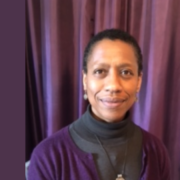
CASA Advocate Claire Holston: A Little Effort for a Big Purpose

Headshot of advocate Claire HolstonThe key to our wellbeing is multifaceted. Our physical, mental and spiritual health all contribute to our overall wellness. Claire Holston – a personal trainer, spiritual practitioner, social justice activist, and Court Appointed Special Advocate of New Hampshire volunteer – is certainly a proponent of this. Claire’s life could serve as a template for how to incorporate and nurture each of these components that, together, bring us fulfillment.

Claire became a CASA in 2013 while working fulltime at BAE Systems in southern New Hampshire. She says, “I had a lot of flexibility with the supervisors that I worked with. In my job, I could manage my own time, and so I was able to fit in CASA training, or if I had to go to court. They were really receptive of that.”

Once retired, Claire shifted her focus from a career in operations to one supporting physical fitness and spiritual wellbeing. She offers in-home sessions through her personal training business, and is a licensed spiritual practitioner through the Centers for Spiritual Living.

Claire sees the value in giving back to her community. “I’m a social justice activist. I do a lot of church activities—I’m very involved in the church, both locally and at the conference level. I’m also involved in the community providing as much diversity, equity and inclusion training as I can.”

Included in all of these powerful acts of service is the transformational work she does as a volunteer child advocate. In nine and a half years as a CASA Claire has been a steadfast support for 10 children, ranging from infants to teenagers. Claire became a CASA over nine years ago. Her tenure includes a two-year hiatus between cases to allow her to focus attention on other priorities, after which CASA of NH excitedly welcomed her back.

One of the things that Claire enjoys most as a CASA is all the people she interacts with. She says, “You get to meet different people in all different settings. I don’t know if there’s a stereotype where people assume that only low-income families become involved with CASA, but it runs the gamut. There have been middle-class people that I’ve interacted with who have also run into issues with neglect and that type of stuff. I always enjoy meeting new people, regardless of who they are.”

Claire continues, “When you step inside different homes, you really get to understand the struggles that people are living with on a day-to-day basis. You can say that it’s a humbling experience. It certainly keeps you grounded in that you may think you’re having a bad day, or a bad situation, but there are others who are less fortunate, and they’re just needing somebody to show that they care.”

In addition to the families, CASAs also work with numerous case professionals. “You get in front of the judge, and you get to interact with DCYF. With the majority of DCYF folks I’ve worked with we’ve had a great connection,” says Claire.

When asked what has surprised Claire most about her work as a CASA, she responds, “That I’m still doing it. Because I didn’t know what I was walking into. I did take a year or so off because I had a lot of things that were going on and I just needed to prioritize them, and when I make a commitment I like to follow through. I didn’t know if I was going to come back when I took that break. But, you know, this work is really important. The people I interact with at CASA are all really nice. They’re all really good to me, and are available when I need to talk to them. Yeah, probably the biggest surprise to me is that I’m still doing it, almost 10 years later.”

Claire has worked on cases involving a wide variety of challenges, ranging from domestic violence to mental health. She reports that, “To see positive results, really for most of my cases so far, has been really rewarding for me.”

One case that stands out for Claire involved an infant whose parents both struggled with mental illness. The child was living temporarily with the grandparents. “We were able to find an adoptive family who was willing to let the grandparents stay involved in the baby’s life. So, I was able to walk step-in-step with them. It was a joy to go and visit. They were doing all the things they needed to do as adoptive parents. I was able to be in court with them on the day the child was turned over to them.”

For Claire and so many advocates, the CASA role is both challenging and enriching to their lives. “You know, I shouldn’t say it’s not all that taxing,” Claire says. “It all depends on the case that you get, each case is different. But it’s not a lot of time, really, to go and get to know a little one or a youth. It’s a little effort for a big purpose. It’s a small piece of the many things that I do in my life.” One of the many things that, together, contribute to a rich and fulfilling life.

If you would like to become a CASA volunteer advocate and help children, consider attending an upcoming virtual information session to learn more, or submit an application today. 

CASA Advocate Thomas Monahan: Building Bonds Through Patience and Consistency

“This is one of those nice little fairytales where it starts out ‘Once upon a time …’ and goes through to ‘The End’ where they live happily ever after. It was my very first case with CASA — my introduction to the CASA world.” 

This is how Thomas Monahan sets the scene when talking about the case he completed in 2021, during which he advocated for three siblings who had been removed from their home due to parental abuse and substance misuse. 

The children were placed in two foster homes, both about a 40-mile drive for Thomas. Even with the distance, he stuck to his scheduled monthly visits with each of the children, and communicated frequently with their DCYF case worker.  

“It was fun to go see the kids,” Thomas recounts. He soon learned that the oldest child loved puzzles. “She staggered my imagination with how quickly she could put a puzzle together. She has a strong intellect. It was an awful shame to see how she had been deteriorating in her home situation with an abusive father and an abused mother. There were no positive opportunities for any of those kids to grow and reach their real potential.”  

In the span between the case opening and Thomas’s appointment, the father became incarcerated. Once Mom was no longer living in fear of abuse and violence, she could focus on her own recovery. By the final hearings, she had completed parenting courses, worked with a parent aide, and participated in a drug treatment program. “She worked hard,” Thomas says. “She definitely wanted her children back and she wasn’t going to let anything stand in her way, even with all the hoops she had to jump through and all the mountains she had to climb.” All three children were able to reunite with their mother. “She did an outstanding job, and it was an admirable ending to the case.” 

Thomas’s understanding and love of children are what really shone through on this case (he himself is a father of four, and in addition to his work as a CASA, he serves as grandpa-nanny to two of his grandchildren). Likely due to the abuse they had experienced, the children were initially very wary of new people. However, through his patience and consistency, Thomas allowed the children to become comfortable around him. “When I met with the children, I made sure I never caused them distress or harm. I would always play a game with them, or color, or work on a jigsaw puzzle together.” 

By the close of the case, the warming effect that Thomas had cultivated was unmistakable. Since he had built a positive relationship with the mother, they planned a final visit so he could say goodbye to the children. “I found myself with a little boy clinging to each leg, and the little girl was hugging me around the waist — and I had been a total stranger to them just a year before. That’s enough to bring a tear to my eye; it’s a moment that will always stay in my mind. Just to have those little children showing that trust, and concern, and care. I’d like to think a bond had been created. I left on a melancholy but happy note.” 

Although there is a need for advocates statewide, Thomas, a lifelong resident of northern New Hampshire, hopes to raise awareness of the need for CASA volunteers in the North Country. “There are children up here who suffer just as much from abuse as the ones in Manchester, Nashua, Keene, and Rochester,” he explains. “I hope that people in my community will see my story and say ‘If Tom can do it, I can too.’ If I can be a posterchild, then that would be a great joy to me. I’m not looking for anything for myself, but these children deserve an advocate.”  

We can’t thank Thomas enough for his care, concern, and dedication to children in need of advocacy.

If you would like to become a CASA volunteer advocate and help children, consider attending an upcoming virtual information session to learn more, or submit an application today. 

CASA Advocate Mike Krizansky: Bringing Hope to Children at Home and Abroad

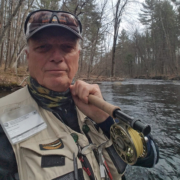
Advocate Mike Krizansky with fishing poleMike Krizansky, retired design engineer and current volunteer for Court Appointed Special Advocates of New Hampshire, is a doer. If there’s one thing that would be torture to Mike, it’s being idle. From golf, to fishing, to restoring classic motorcycles, his list of interests is robust. And just as robust is the variety of ways in which he gives back.
As a CASA volunteer, Mike advocates for children who have experienced abuse or neglect. His goal is to determine what is the best safe and permanent home for the child. Amusingly, although he towers above them at 6’1”, he delights most in working with infants.

Mike says, “When you see a child at six weeks, and then you see them at one year, you know how big that change is. They grow, they learn, they have words, they develop their own personalities. I get to see a big change, and I feel like I’m having an impact on them.”

Mike has advocated for multiple infants who were born substance-exposed, and thus the Division of Children, Youth and Families became immediately involved. “My first case ended with reunification, which I think is spectacular,” he recounts. “I was on pins and needles for the first six months, not knowing what was going to happen. There were surprises around every corner. Every court appearance had both a good outcome and a catastrophe for Mike as a CASA because my path forward would change.”

He continues, “I was introduced to the child at six weeks, and we are still in touch now, after the close of the case. I have lunch with her and her mom about once a month. Mom struggled often during our engagement, which resulted in added months to our working relationship. The division kept on with the parent, I as the CASA kept on with the child. And in the long run mom is sober, the child is in daycare and is socially active. The child just knows me as ‘Mike’, we get together and have hot chocolate or lunch, just the three of us. I was part of a solution. Mom did all the work, and I just kind of held everybody’s hand, and it worked. My greatest reward is having the friendship and trust of the parents afterwards.”

In addition to being a CASA, Mike volunteers with senior citizens at home in Ipswich, Massachusetts, providing medical transport for seniors. “The seniors all get a kick out of driving around in the red Jeep,” he says. “They just think it’s a hoot that they have to climb up a ladder to get into my Jeep.” Mike also has a once-weekly route for Meals on Wheels. “I have seven to 10 clients that I deliver meals for in the morning, and so of course I know all of them. Part of my job is to make sure I have a few words with them every morning, as I may be the only person these seniors may see during the course of the day.”

Recently, some of Mike’s charitable efforts have taken place much further afield. “I fish a lot, and I try to fish somewhere exotic and different at least once a year.” This past October, Mike traveled to Poland. He says, “I was staying about 100 km from the Ukrainian border. Before my trip I called my associate there and asked him if they were housing any of the Ukrainian refugees, and if there was anything in particular that they needed that I could bring from the states. He said because the men weren’t allowed to leave Ukraine it was only the women and children. He told me the women were really short on facial creams and hand creams. I asked about the children, and he said anything to take their minds off what was going on and wondering where dad was, why he wasn’t there.”

Mike and the colleague he was traveling with got to work. “We decided that we would take all the blue jeans that we no longer fit into and make a care package, and my friend’s wife and social circle got coloring books that were all in English, and we got crayons, and put some facial creams together for the women, and we trucked all this over in our suitcases.

“When we got to southern Poland we went to the local gymnasium, which was being used as an impromptu school, and we handed out all of this stuff to the kids. Surprisingly enough, Ukrainian children are taught and speak English. When they opened the coloring books up they knew who Mickey Mouse and Superman were. It was very heartwarming to hand these things out just to let them know that there’s somebody someplace else that’s thinking of them, and here’s something to take their mind off things.”

As for the blue jeans, he says, “I was hoping those could go to the husbands, but ultimately what the Ukrainian women did was rip them apart and they made quilts and insulated jackets to send to their husbands. It was just a warm, wonderful situation to watch this unfold and to meet these people.”

It’s clear that Mike’s love of children, and people of all ages, knows no borders. When it comes back to his role with CASA of NH, he says, “I think the most rewarding thing is knowing when I go home, that I’ve got some influence on one, two, or three children’s lives. I’m not going to get on a soapbox and say that without me they couldn’t have done it, because I’m not doing all the work. I’m just reporting, and observing, and just trying to be as kind and communicative to both the children and the parents, and the Division, my program manager, and the court as I possibly can, and maybe offering some of my influence. I get a great deal of emotional support from seeing the progress that my bio moms and dads are making and that the children are making. I use it as fuel to write my reports, to spend time to text my foster parents or my bio parents, to talk to my children and make sure I get the visitation in.”

Mike also feels supported by the CASA staff and his fellow volunteers. “If you’ve got a problem, if you’ve got a question, or if circumstances are not what you think they should be, there are other people there who have experience. It’s a nice team, a nice family. If you wear the pin, and you stop into another regional office, and it’s kind of like ‘here’s your desk!’ I guess we all realize what we all go through, and we keep that happy face on and are pleasant to each other and to everybody else. I really do feel like it’s a great family.” A family that is all the better for having Mike in it.

If you would like to become a CASA volunteer advocate and help children, consider attending an upcoming virtual information session to learn more, or submit an application today. 

CASA Advocate Kathleen Bernstein

Kathleen Bernstein Photo

After retiring early, Kathleen Bernstein knew she still had more to give the world. Having “spent enough time making rich companies richer,” as she puts it, Kathleen decided to donate the rest of her working career away. She and her husband adopted their own two children, who are now grown, when they were six-and-a-half and almost five years old. By stepping forward to become a Court Appointed Special Advocate, Kathleen works directly to help other children either be reunited with their parents or have a smooth transition to adoption.

Kathleen isn’t one of the longest tenured volunteers at CASA of New Hampshire. But looking at the considerable list of children she’s advocated for in her three years as a CASA—11 children from six families—that’s hard to believe. The need for more CASA volunteers is immense, and it’s tough for Kathleen to turn down a case knowing it could mean leaving a child without anyone solely dedicated to looking out for them and their wellbeing.

Kathleen remarks, “If I had to do it all over again I would. I would definitely go through the training. I think I get more than I give to my kids. I’m proud when they sing in their high school concerts, and when they introduce me around. It will be the volunteer option I will do until I can’t do it any longer. Although maybe I won’t take on four cases at once like I have now!”

On one of her current cases, Kathleen is the advocate for a youth who has been in the protective system a number of years. Originally, the child had a male CASA, but as she got older it was agreed that she could benefit from the support of a female CASA. “She was a teenager when I started working with her,” says Kathleen, “and I assumed that I would be with her until she was 18 to 21.” This is because sadly, the adoption rate for teens is much lower than for younger children. “She’s had a rough life. But through some additional efforts it now looks like she’s going to be adopted soon. When we all got on the conference call and got to tell her that we’d found the family for her, we were all crying.”

“It’s worth the effort,” Kathleen says. “It’s worth the time you put into it, as little or as much as you can put into it. If you can only take one case, once case is still good. One case is one child or a few siblings that you can help show that somebody else cares.” She continues, “They’re hard cases, they’re really hard cases, but then it’s all worthwhile when you get a child reunited with their parents or adopted, especially if they are in their teens. She and her success make the hard days worth it. Now she has a very loving family.”

Many CASAs have their niche—an age range or set of family dynamics or circumstances where they excel and find particular gratification. Volunteers are encouraged to accept cases that are the right fit for them. While Kathleen has advocated for children of all ages (like the four-year-old with whom, she says, “we play tag until my feet can’t take anymore”), it’s working with teens that she finds most rewarding.

“With the teenagers, sometimes it’s challenging getting them to talk and open up. A six-year-old will tell you anything. But with a teenager you get a lot of ‘It’s OK. Yeah, I’m good.’ It’s challenging to build that relationship, so that they trust you and they know that you’re going to be there. But it’s the most rewarding when they finally say, ‘OK, this is what I want…’”

Kathleen builds these relationships by pointing out to her teens that CASAs are volunteers. For instance, she says, “When I explain that I can’t take them anywhere in my car because I’m a volunteer they say, ‘You’re a volunteer? Why would you do this?’ And I tell them it’s because I like young adults, and being able to be the one person who comes and talks to them. Sometimes we’re the one person in their lives who isn’t paid to be there. The older ones are a little more jaded. They see a lot of therapists and social workers, but I’m just there because I want to be there.”

Kathleen admits that it’s not always easy being a CASA. She explains, “There are nights where I lose sleep over what I’m going to say, or what I’m going to do—for example, when I’m fighting for a child’s right to stay in their school district when there are financial decisions that counteract what is in their best interest. But I believe I’m making a difference, even if it’s only one child, one year, one life at a time.”

One child, one year, one life at a time. Kathleen’s words are humble, but in her case, this can be multiplied by 11. In the history of CASA of NH, it’s over 10,000 children. 10,000 lives. But Kathleen’s message is clear: even if it was only one, all her effort, even the difficult moments, would still be worth it.

Kathleen has given so much, and she has also gained some. “I think I look at the world a little differently in some ways. Moms have it hard, dads have it hard, and the world’s not making it any easier. But I think I try to be a little bit more compassionate, a little bit more understanding. When I’m in the grocery store and there’s a mom struggling with two small children I tell her, ‘It gets better, it’ll get easier’ and ask if she’d like help loading her bags into the car, or something like that.” Add that to the long list of ways Kathleen is making a difference in the lives of children and families

If you would like to become a CASA volunteer advocate and help children, consider attending an upcoming virtual information session to learn more, or submit an application today. 

CASA Volunteer Advocate Mike LaRoche

Photo of Mike LaRoche

Mike LaRoche’s volunteer journey began one fall evening in 2009. Up until then he’d contributed his fair share of time in support of his wife’s tremendous volunteer efforts, but always doing ancillary tasks. Setting up tables and chairs and running the concession stand at football games was helpful, but Mike wanted to do something more significant; something that was his own. Says Mike, “I was looking for something that wouldn’t be about me, but would be truly giving back. It happened that I heard a PSA for Court Appointed Special Advocates of New Hampshire on the radio one evening. I didn’t know what CASA was, so I investigated it, and here I am 13 years later.”

He continues, “Step by step, I journeyed into becoming a CASA. And it’s absolutely the most fabulous thing I’ve ever done in my life, aside from marrying my wife and having my children. I can’t explain to people the incredible impact I can have over time and even instantaneously with the children on these cases. And how easy it is. You just have to show up and introduce yourself. And then, when you tell the child you’re coming back, you have to come back when you say you’re coming back, and you have to reintroduce yourself. But over a year, over a couple of years sometimes, you develop trust with that child. And that’s the most important tool we have, because until that child trusts you they’re not going to share with you the most compelling and important things, which are what we need to know and share with the judge. So it’s just a fabulous thing.”

When Mike talks about his volunteer work, he can’t hold back a small smile. But it’s his eyes that are the most telling. Diamonds couldn’t outshine their twinkle as he speaks of the good he’s able to accomplish as a CASA.

“I look forward to it,” Mike says. “It’s a break from my workday world. It puts the rest of my life into perspective. I always come back from my visits, or team meetings, or court hearings feeling exceptionally grateful for how fortunate I am with my family, and with my life growing up because I was not abused or neglected. My worst day at work can never be nearly as bad as what some of these children go through, and that’s my mantra. So, I love it. I love being able to break away and go do my CASA work. What I do as a CASA is so significant to me that I have no problem making the time for it. I think most people would be the same.”

There are many fulltime employees who, like Mike, have a deep desire to help, but feel they’re unable to play a meaningful part until after they retire. Mike says, “When I speak about my role at CASA to people with busy lives, careers, and families to care for, I can see in their eyes that they’re thinking they could never fit this in.” Chuckling, he continues, “I always jump in and say ‘oh, yes you could!’ I can, and so I know others can.”

Mike reinforces this with some practical advice. “I encourage people to go to their employer. Because what I have found through my own experience is that once you explain to your employer how significant this work is, and that it’s something you want to do, most employers will support you 100%. They’ll work with their employee to help free up their schedule.”

Some employers offer paid time off for volunteer work, which can cover a portion of a CASA advocate’s time. And many allow employees the needed flexibility in their work schedule to attend to their CASA duties. Gaining your employer’s backing early in the process can be the key to balancing a fulltime work schedule and a meaningful contribution as a CASA.

Mike assures you that your efforts will be worth it. “I’ve had many cases, and I can say that a great majority of them have had wonderful endings. I’ve made some friends with not only children, but with parents, and we keep in touch occasionally throughout the year even after the case ends. Or I’ll bump into them somewhere and they always smile, they always say hi, they remember my name, I remember theirs, and it was nice, at that moment in their lives, to have brought some positivity to them.”

Those of a certain age can probably recall the ubiquitous “Be Like Mike” ad campaign of the early 1990s. While none of us who isn’t already a 6’6” basketball prodigy has any chance of ever becoming one, we all have the chance to be a star in the eyes of a child. If you have the desire in your heart to help a child, then CASA of New Hampshire can provide all of the training and support you need to Be Like Mike.

If you would like to become a CASA volunteer advocate, consider attending an upcoming virtual information session to learn more, or submit an application today. 

CASA Advocate Shawn Bailey: Permanency Means Family

Advocate Shawn Bailey

This summer, Lakes Region real estate agent Shawn Bailey will celebrate his 17th year volunteering with Court Appointed Special Advocates, or CASA, of New Hampshire. The circumstances that trigger the need for CASA volunteers, child abuse and neglect, are certainly not happy ones; but when you look at Shawn’s work, you’ll discover that there’s also much to celebrate.

When a case opens, it is because a child has suffered or been endangered due to their parents’ actions or struggles. What these children have endured is often heartbreaking, and sometimes unimaginable. But the point where a CASA is assigned to them is the time when things can begin to get better. With the right support and resources families can work toward reunifying stronger than they were before. If this isn’t possible, a path to adoption or another permanency option can be laid, often with a family the child has been with for a while and who they know and trust.

During Shawn’s time as a CASA, he has served 24 children from 15 families. He has seen stories of hope play out. Stories that he helped write. Stories that are cause for celebration.

Two in particular stand out to Shawn. “I had a case with a toddler,” he says. “The parents were fairly non-compliant with what the court asked of them, until the father went to prison. At that point, mom turned things around. She completed a drug treatment program, was able to reunify with the child, and they are still doing fantastic. I get to see her out and about from time to time and she’s a sweetheart — she’s a really good person. She’s a totally different person than I knew when she was using substances. In some of the cases the parents succeed, and that’s a great thing.”

The second case began when a woman experiencing abdominal pain went to the hospital. It turned out she was in labor — she hadn’t even known she was pregnant. The mother had been using substances for about five years. “Mom went right into a program when she got out of the hospital, and is now sober. She still has a way to go,” Shawn says, “but we’re hopeful.”

For Shawn and many other CASAs, the most meaningful part of a case comes at the one-year mark with the judge’s permanency decision. “In my experience, the children are very happy that they’re either reunifying or they’re going to be adopted. Permanency is a very happy time,” Shawn says.

If the walls of the CASA office could suddenly speak, permanency might be their first word. The Juvenile Law Center describes it this way: “Simply put, ‘permanency’ means family. It means having positive, healthy, nurturing relationships with adults who provide emotional, financial, moral, educational, and other kinds of support as youth mature into adults. Ideally, permanency takes the form of a relationship that has a legal component that provides a parent-child relationship. [It’s having a] family and support system that both lifts [the child] up and cushions them if they fall.”

Ultimately, this is what Shawn and other CASA volunteers are working toward — a permanent home where their case children can thrive. It’s work that Shawn finds incredibly satisfying. “It’s rewarding to get to know the children and help them through the hard times they’re going through. It’s amazing to see how resilient they are. Boy, if someone loves them and gives them some structure and stability, they latch right onto that, because they really have been ‘set aside,’ so to speak, because their parents are in trouble. We strive for a positive outcome for the child.” With his perseverance and dedication, Shawn has helped bring about many positive outcomes for children.

Shawn has found that his role as a CASA fits in well with his work as a real estate agent. CASAs dedicate about 10–15 hours a month to their volunteer work. This includes time spent meeting with their case child, talking with parents and other important adults in the child’s life, and presenting the vital information they gather in a written court report. Four to five times a year the CASA speaks in court to help the judge assess the progress of the case. Shawn says it isn’t difficult for him to plan his work schedule around his volunteer commitments, and vice versa.

Shawn’s commitment to children extends beyond his CASA role. He and his wife Jennifer are key supporters of the Greater Lakes Region Children’s Auction, which raises funds for local organizations that assist children (including CASA of NH). Over the years, Shawn has pitched in answering phones during the live auction, participating on a Challenge Team, and organizing toy drives. “I have a soft spot for children, pets and senior citizens, but children the most,” Shawn says. For children in hard places, that soft spot in Shawn’s heart has made a world of difference.

If you would like to become a CASA volunteer, consider attending an upcoming virtual information session to learn more, or submit an application today. 

Married CASA Advocates: Toni Egger and Rob Taylor

Rob and Toni

When it comes to volunteering with Court Appointed Special Advocates, or CASA, some might wonder, what’s it like to have two volunteers living under the same roof? Married couple and CASA advocates Toni Egger and Rob Taylor have the answer: two really is company.

Initially Rob and Toni were interested in becoming foster parents. And while they had the space in their home and in their hearts to foster, they were very busy raising their two small sons. For Toni, becoming a CASA was the perfect solution. It allowed her to help the same children in need, while caring for her own children. Toni was the first to take the leap to volunteer as a CASA in Seattle, when they were living on the west coast.

A hop, skip, and a jump of moves later, Toni, Rob and family landed in New Hampshire. As they settled into the Granite State, Toni resumed her CASA role, this time on the east coast. Concurrently Rob volunteered to help new immigrants establish their lives in the United States. However, after changes to immigration policy drastically reduced the need for that volunteer work, Rob decided to join the CASA family alongside his wife.

Three years have since passed, giving the couple ample time to discover what it’s like for them to serve simultaneously as CASAs. The verdict is resoundingly positive. While each must serve on their own cases and they can’t discuss any case details, as all case specifics are confidential, they can understand and relate to what the other is going through. “We have our own little support system right here,” Rob reports.

“I agree with that entirely,” says Toni. “We can give each other emotional support. There can be some rough moments in this work, and I have Rob as my friend and support. And we can also share our victories when something goes really well. In our collective cases we’ve had two really successful adoptions, and it was great to be able to celebrate those with each other.”

Both Toni and Rob feel very fortunate to have had the childhood and educational opportunities they did. For each of them, CASA is a way to give back and help children who don’t have those same advantages. As Rob puts it, “We want to do something that contributes to the welfare of the world.”

The work of a CASA is hard at times, but Toni finds the children themselves the most rewarding part of this role. “It’s the kids—it’s just the kids. They’re open and ready to have adult friends and to look to someone who they trust to help them meet their needs. I’ve developed pretty good relationships with each child I’ve worked with. I’m still invited by some to their birthday parties. And seeing them succeed at things—it’s those little moments that are pretty rewarding.”

Rob too delights in moments he’s shared with the children. “I took a chess set to a visit with my teenage CASA child last winter, because he loves to play games outside but it was too cold and snowy. And darned if he didn’t beat me at the first game! Turns out he’s a pretty good chess player! So, these kids are full of surprises.” Here Toni chimes in, “Rob said he was pretty proud of himself too!”

At CASA of NH, we have seen that abuse and neglect can often be a cycle that continues through generations. But the opposite is also true. The countless hours Toni and Rob have spent in service has had a ripple effect on their family. “Our younger son worked in Boston with an organization that helped young kids learn math and business skills, and he said that he was committed to that because of what he had seen us do over the years with CASA and other volunteer services. Now that he’s a dad and runs his own business he doesn’t have time for that, but I think he appreciates his own kids that much more, and we certainly feel fortunate that our grandkids have a solid family life. It makes you wake up each day feeling grateful.”

Toni and Rob would encourage others, couples included, to consider volunteering with CASA. “It’s a great way to help less fortunate people in the community,” says Toni, “particularly if you like kids. And if you have spent time with kids in some capacity, as a coach, teacher or parent, then you have all the experience you need to get involved.”

“We tell people that it’s not for everyone,” Rob continues, “but after your initial training you can decide if it’s more than you can handle, or if you’re saying ‘let’s go, let’s do this! You can decide whether this is right for you.”

Those who choose to volunteer with CASA can expect to have the full resources of the organization behind them, as Rob and Toni have experienced. “The support and training by the CASA organization has been really great. I hope that people who are potentially interested in signing up are made aware of just how much support there is. It’s impressive,” says Toni.

What’s also impressive is the dedication this couple has shown to children in need. Two terrific people, one household, and one shared mission of helping children.

If you would like to become a CASA volunteer, consider attending an upcoming virtual information session to learn more, or submit an application today. 

CASA Advocate Alison Lawrence: Showing Up to Make a Difference

Over the course of her 12-year service at Court Appointed Special Advocates (CASA) of New Hampshire, Alison Lawrence has gained a bit of a reputation. She’s even earned herself a nickname: The Finisher. And while this all sounds quite ominous, it’s actually much the opposite.

One of the first things you’d notice when meeting Alison is that, judging by her accent, she’s not from “around here.” In 2001, Alison and her family moved from England to New England when her husband accepted a job in New Hampshire. Since she came to the states on his work visa, Alison wasn’t allowed to obtain paid employment herself. She had been an elementary school teacher in London, so she began volunteering at her children’s school. She continued to look for volunteer opportunities and when she discovered CASA, Alison felt like it was a perfect fit.

Alison has worked on a wide array of cases. She has seen children adopted and she’s seen families reunified. She’s had cases where she and DCYF were in agreement, and others where the facts led her to a different conclusion.

In one case, Alison believed that reunification was safe and possible when DCYF felt otherwise. Ultimately the judge agreed with Alison and the family was reunified. “That was hard,” Alison says. “It felt really difficult to be in opposition to DCYF, but it was hugely satisfying to think how hard we worked to get that little girl to go home, which was not going to happen otherwise. It was really wonderful for the judge to listen and to make you feel like your thoughts matter.”

The value judges place on the CASA’s insight is one constant Alison has experienced throughout her cases. “I’ve had the judge lean across the bench to me and say, ‘So come on Alison, what do you think?’ And that’s because very often you are the one who sees that family the most. You do have a closer point of contact.” By working on only one or two cases at a time, the CASA is able to get to know the child themselves, the parents, and the various issues, needs, and family dynamics at play more acutely than perhaps anyone else working on that case. They pick up on things others might miss and they see the continuum of whether parents are making the necessary progress.

Alison says adoptions are “absolutely adorable and the most beautiful thing you’ll ever get see.” As the advocate for infant twins who were taken into care immediately from the hospital, Alison was there to see their adoption.

Sadly, Alison reports she’s witnessed a rise in the number of cases involving infants due to the opioid crises. More babies are being born substance-exposed to parents who are unable to care for them due in large part to their substance misuse. “People often say to me, ‘Oh, I don’t know how you could do that work, it would break my heart, it’s so sad.’ But I think it’s the complete opposite! It’s not sad at all. We all know these terrible things go on, but let’s make the best of what is happening. Let’s try to improve it! I saw two children get adopted into a family where they mean the world. Can you give me a better example of something with a more phenomenal outcome?”

Teenagers, on the other hand, pose their own set of hurdles. “My very first case was probably the most challenging. It was an older youth who had so many opinions on what he thought was best. When you’re in a bad situation you lash out at everybody. But as crazy as it is, I feel like sometimes I have the worst relationship with a teenager, yet they contact me when they need someone. You realize that they don’t see me as the enemy, they actually see me as being quite supportive of them.”

It’s through some of these cases and others like them that Alison earned her CASA moniker, The Finisher. As Alison attests, “if you call me and you’re in a pinch, I’ll say yes.” Once CASA staff discovered this, along with her ability to always stay neutral and to see the big picture, Alison’s phone began ringing with requests for her to step in when other CASAs had to leave a case. Alison would see these cases through to the end, ensuring each child continued to receive the attention and support that a CASA provides.

To those wondering how a CASA even begins a case, Alison advises, “Just be you. Treat this as if you weren’t doing it in a legal way, and you’re actually just a friend of the family. If you had just met somebody, what would you say to them? Just remember you’re talking to another human, and all the other stuff will come in time. It absolutely is a whole new world, and you’re learning on your feet. You’ll get there, and you’ll always have the support of people around you within the organization.”

One could spend a lifetime doing this work and still encounter new things. Having worked with 17 children on 13 different cases, Alison hasn’t “seen it all,” but her experience is considerable. So, it’s significant that she emphatically (and frequently) encourages others to consider becoming a CASA. “When people say they’ve thought about doing this, but it would be too sad, it would break their heart, I ask them, ‘is it better for you to deal with that, or for it not to be dealt with at all?’ I tell them they will be fine, and that they will have cases that are so heartwarming it will balance it all out. Yes, these are difficult situations, but we’re always aiming to get the best outcome.”

For some lucky and deserving children, The Finisher was on the job to help them reach their best outcome. For others, it could be you.

If you would like to become a CASA volunteer, consider attending an upcoming virtual information session to learn more, or submit an application today. 

CASA Advocate Kerri Harrington: The Needs of the Child Come First

CASA Advocate Kerri Harrington

Volunteering in her community has always been a part of Kerri Harrington’s life and a value her mother instilled in her. A friend suggested Kerri consider CASA because she’d always had the courage to speak for those who didn’t have a voice. Kerri was intrigued by the idea of becoming a CASA and thought she would take it on during retirement, but the transition to virtual CASA training two years ago allowed her to take on this important work now.

Throughout Kerri’s life, she’s been drawn to working with children. Her experiences in the Peace Corps working with children in schools and orphanages in Kazakhstan shaped her understanding and empathy for society’s most vulnerable members. She knew this would be a challenging volunteer job, but with the support of her program manager and fellow CASAs, she has found great success in doing this critical child advocacy work.  She added, “It’s also nice to have friends and family who support the volunteer work you do.”

Kerri has worked on two cases in her two years as a CASA advocate. At the start, she was shocked at the number of children in the family court system and the limited resources available to support those needing help. This helped her discover more of her own empathy seeing the challenges these families are facing and is driven to remain a part of the CASA program to try and help. Kerri explained, “No matter the turmoil in the case, everyone involved works to ensure that the needs of the child are always first.”

Kerri shared, “You can make an impact in one child’s life which makes a difference in the community as a whole.” She has discovered this advocacy work makes a significant impact and can interrupt the cycle of abuse and/or neglect for generations to come. “I encourage everyone to consider this volunteer opportunity. If you are thinking you can do it, you can.”

There is a serious shortage of CASA advocates for children in the North Country who have experienced abuse or neglect.

If you would like to become a CASA volunteer, consider attending our June 6th North Country virtual information session to learn more, or submit an application today.